
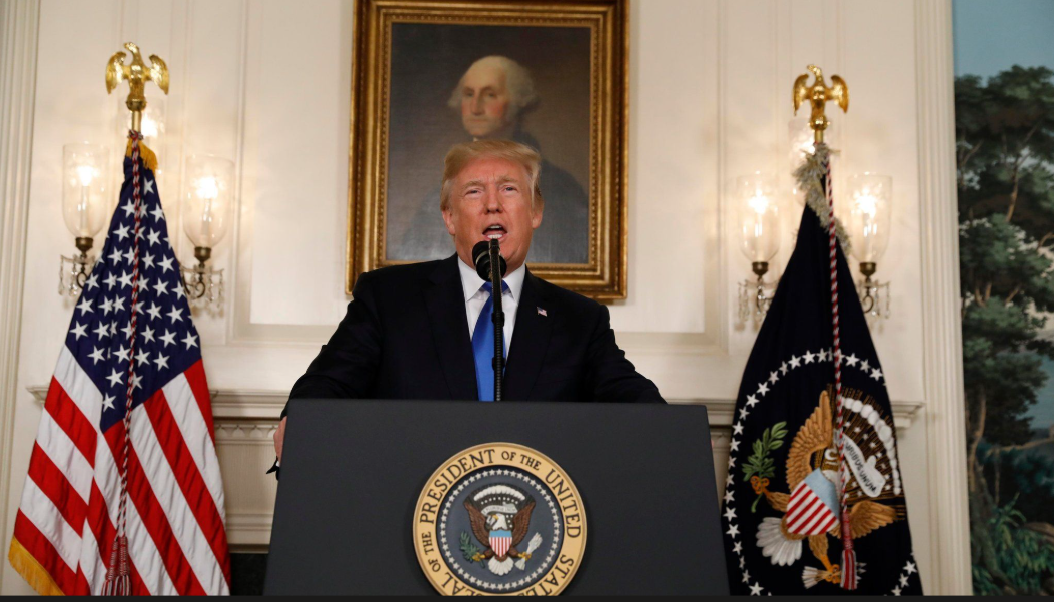
The relationship between former U.S. President Donald Trump and Iran represents one of the most consequential geopolitical confrontations of the twenty-first century. From Washington’s withdrawal from the Joint Comprehensive Plan of Action (JCPOA) to the implementation of the Maximum Pressure campaign and the targeted killing of General Qasem Soleimani, Trump’s Iran policy fundamentally reshaped the strategic landscape of the Middle East.
While the administration sought to compel Tehran into accepting a broader and more restrictive agreement, the policy ultimately produced mixed results. Although Iran experienced severe economic hardship, the regime maintained its strategic posture, expanded aspects of its nuclear program, and deepened cooperation with non-Western partners. At the regional level, Trump’s policies accelerated new security alignments while simultaneously increasing the risk of long-term instability.
As tensions between major powers continue to shape international affairs, the legacy of the Trump administration’s Iran strategy remains highly relevant to contemporary debates on nuclear proliferation, regional security, and global power competition.
The JCPOA Withdrawal and the Maximum Pressure Campaign
A defining moment in U.S.-Iran relations occurred in May 2018 when the Trump administration formally withdrew from the Joint Comprehensive Plan of Action (JCPOA), commonly known as the Iran Nuclear Deal.
The administration argued that the agreement failed to address several critical concerns, including Iran’s ballistic missile development, regional proxy activities, and the sunset provisions that would eventually ease restrictions on Tehran’s nuclear program. From Washington’s perspective, the agreement delayed rather than eliminated the long-term nuclear challenge.
Following the withdrawal, the United States launched the Maximum Pressure campaign, a comprehensive sanctions strategy designed to isolate Iran economically and diplomatically. Severe restrictions were imposed on Iran’s oil exports, banking sector, shipping industry, and key economic institutions.
The economic consequences were significant. Iran experienced declining oil revenues, currency depreciation, rising inflation, and increasing pressure on domestic industries. Nevertheless, the campaign failed to produce the political concessions anticipated by U.S. policymakers.
Rather than returning to negotiations under American terms, Tehran adopted a strategy of strategic resistance, seeking to withstand economic pressure while preserving its core security interests.
The Soleimani Strike and Escalating Military Tensions
Tensions between Washington and Tehran reached their most dangerous point in January 2020 when the United States conducted a drone strike near Baghdad International Airport that killed General Qasem Soleimani, commander of the Islamic Revolutionary Guard Corps’ Quds Force.
The operation marked one of the most significant escalations in U.S.-Iran relations in decades. For Washington, Soleimani was viewed as a central architect of Iran’s regional military strategy and support for proxy groups throughout the Middle East.
Iran responded by launching ballistic missile attacks against military installations hosting U.S. personnel in Iraq. Although both sides ultimately avoided a direct military confrontation, the incident brought the region dangerously close to open conflict.
Beyond its immediate military implications, the Soleimani strike effectively eliminated much of the remaining political trust between the two countries. It also reinforced the increasingly confrontational nature of regional security dynamics, where proxy conflicts, deterrence strategies, and asymmetric warfare continue to play central roles.
Regional Realignment and the Abraham Accords
Trump’s hardline approach toward Iran also contributed to a broader restructuring of Middle Eastern geopolitics.
A major development during this period was the signing of the Abraham Accords, which normalized relations between Israel and several Arab states. While the agreements reflected diverse political and economic interests, concerns regarding Iran’s growing regional influence served as a significant catalyst for closer cooperation among former adversaries.
The emergence of informal strategic coordination between Israel and several Gulf states represented a notable shift in regional security calculations. For many governments, Iran increasingly became the primary security concern, surpassing traditional political divisions.
At the same time, Iran intensified its “Look East” strategy by strengthening political, economic, and security ties with non-Western partners. This shift reflected Tehran’s efforts to mitigate the impact of Western sanctions and reduce dependence on traditional international institutions.
Consequently, Middle Eastern geopolitics became increasingly interconnected with broader patterns of great-power competition, extending beyond regional rivalries alone.
Why Maximum Pressure Failed to Achieve Its Strategic Objectives
Despite imposing substantial economic costs on Iran, the Maximum Pressure campaign ultimately failed to achieve its principal objective of compelling Tehran to negotiate a fundamentally new agreement. Several factors explain this outcome.
First, Iran’s political system demonstrated a considerable degree of resilience. The Islamic Revolutionary Guard Corps retained extensive influence over both economic and security structures, allowing the regime to maintain internal stability despite growing economic challenges.
Second, economic pressure alone proved insufficient to alter Iran’s strategic priorities. Tehran continued to view its missile capabilities, regional partnerships, and deterrence posture as essential components of national security. Consequently, major concessions were politically and strategically unacceptable under conditions of coercion.
Third, Iran sought alternative diplomatic and economic partnerships to reduce the effectiveness of U.S.-led sanctions. These relationships provided limited but meaningful opportunities to mitigate external pressure and maintain strategic flexibility.
As a result, the campaign succeeded in weakening Iran economically but failed to generate the broader political transformation envisioned by its proponents.
Nuclear Proliferation Risks and Strategic Consequences
One of the most significant consequences of the U.S. withdrawal from the JCPOA was the gradual deterioration of nuclear restrictions on Iran.
Following the collapse of the agreement, Tehran progressively reduced its compliance with several key provisions and expanded uranium enrichment activities. This development heightened concerns among regional and international actors regarding the future of nuclear non-proliferation.
The implications extend beyond Iran itself.
An unresolved nuclear issue could encourage regional states to pursue additional security measures, intensify military competition, and increase uncertainty throughout the Middle East. The possibility of a regional arms race remains a persistent concern among policymakers and security analysts.
Moreover, continued deterioration of the nuclear file risks undermining confidence in diplomatic agreements as effective instruments for conflict management and arms control.
The future trajectory of Iran’s nuclear program therefore remains one of the most important variables shaping Middle Eastern security in the coming decade.
Strategic Forecast (2026–2028)
Scenario One: Managed Competition
The most likely scenario involves continued strategic competition between the United States and Iran without direct military conflict. Diplomatic engagement may continue intermittently, particularly on issues related to regional stability and nuclear monitoring. However, deep-rooted mistrust on both sides will likely prevent a comprehensive breakthrough.
Scenario Two: Prolonged Low-Intensity Confrontation
A second scenario involves sustained rivalry through proxy actors, cyber operations, economic measures, and information campaigns. Under this framework, tensions remain elevated while both sides seek to avoid actions that could trigger a broader war.
Scenario Three: Escalation and Nuclear Crisis
The highest-risk scenario would emerge if Iran significantly expands its nuclear activities or if a major regional security incident occurs involving U.S. forces, Israel, or Iranian-backed groups.
Such developments could dramatically increase the risk of military escalation and generate severe consequences for regional stability, global energy markets, and international security.
GlobalLens Assessment
The legacy of the Trump administration’s Iran policy extends beyond sanctions and diplomatic confrontation. It reflects a broader transformation in the strategic architecture of the Middle East.
While the Maximum Pressure campaign imposed considerable economic costs on Tehran, it did not fundamentally alter Iran’s regional ambitions or strategic behavior. Instead, it accelerated regional realignments, intensified concerns regarding nuclear proliferation, and reinforced patterns of geopolitical polarization.
Looking ahead, the central challenge for policymakers is no longer limited to managing bilateral U.S.-Iran relations. Rather, it involves constructing a sustainable regional security framework capable of addressing nuclear risks, great-power competition, and persistent instability across the Middle East.
The future of U.S.-Iran relations will remain a critical factor in determining the trajectory of regional security and the broader international order.
Conclusion
Trump’s approach toward Iran represented one of the most ambitious attempts in recent decades to reshape the strategic balance of the Middle East. Through economic sanctions, diplomatic isolation, and military deterrence, the administration sought to constrain Iran’s influence and compel a redefinition of its regional role.
Although these policies produced significant economic and geopolitical effects, they fell short of delivering a comprehensive resolution to the underlying challenges at the heart of the U.S.-Iran rivalry.
Today, the consequences of those decisions continue to shape debates over nuclear diplomacy, regional security, and international order. As policymakers confront an increasingly fragmented geopolitical environment, the lessons of the Trump-Iran confrontation remain essential for understanding both the opportunities and risks that lie ahead.