
INTRODUCTION: A DIAGNOSIS BEYOND THE NUMBERS
April 16, 2026, China’s National Bureau of Statistics (NBS) released Gross Domestic Product (GDP) data for the first quarter, showing a 5.3% year-on-year growth. This figure not only surpassed most Western investment bank forecasts but also temporarily alleviated external concerns that the Chinese economy was entering an “L-shaped” stagnation. However, as geoeconomic analysts, we must immediately look through this seemingly “bright” number to its underlying Structural Paradox.
This data does not signal the end of China’s economic crisis; rather, it marks the solidification of a “Non-Equilibrium Growth Model.” The core characteristic of this model is the prioritization of a state-led industrial output surge at the expense of internal consumption and financial stability. This will generate profound negative spillovers for the global trade order and the security architecture of the Indo-Pacific region throughout 2026.
- DIAGNOSIS: THE SOLIDIFICATION OF NON-EQUILIBRIUM GROWTH
The news coverage correctly captured the imbalance in growth drivers: Industrial Output (+6.1%) was robust, while Retail Sales (+4.7%) remained sluggish. This dual pattern of “strong industry, weak consumption” reveals the deepest structural flaw in the Chinese economy.
1.1 “New Productive Forces” and a Keynesian Variant of Industrial Nationalism
The 5.3% growth was primarily driven by High-Tech Manufacturing—specifically the “New Three” (electric vehicles, solar panels, and lithium-ion batteries). This is not a market-driven outcome but the victory of “Industrial Nationalism.” Beijing is concentrating state capital into specific strategic industries, attempting to maintain China’s central role in global supply chains through technological upgrading.
- Think Tank View: This is a form of “Supply-Side Keynesianism.” Traditional Keynesianism stimulates the economy through demand (consumption), whereas Beijing is expanding production by supplying near-infinite cheap capital. This leads to an inevitable result: severe overcapacity.
1.2 The Long-Term Real Estate Crisis and the “Balance Sheet Recession” Ghost
Another critical detail in the data is the continued stagnation of real estate investment. Despite multiple rounds of government rescue policies, household sector confidence has not recovered.
- Think Tank View: China is on the verge of a “Balance Sheet Recession.” Both the household and corporate sectors are prioritizing debt repayment over spending expansion. Consumption weakness is not a temporary mood but a rational choice following the long-term erosion of household wealth (property devaluation). This means the “China Engine” that once relied on internal demand to pull the global economy has officially retired.
- SPILLOVERS: ACCELERATING GEOECONOMIC CONFLICT
China’s non-equilibrium growth model translates directly into pressure on the global economic order.
2.1 Overcapacity as a Diplomatic Weapon and Trade War 2.0
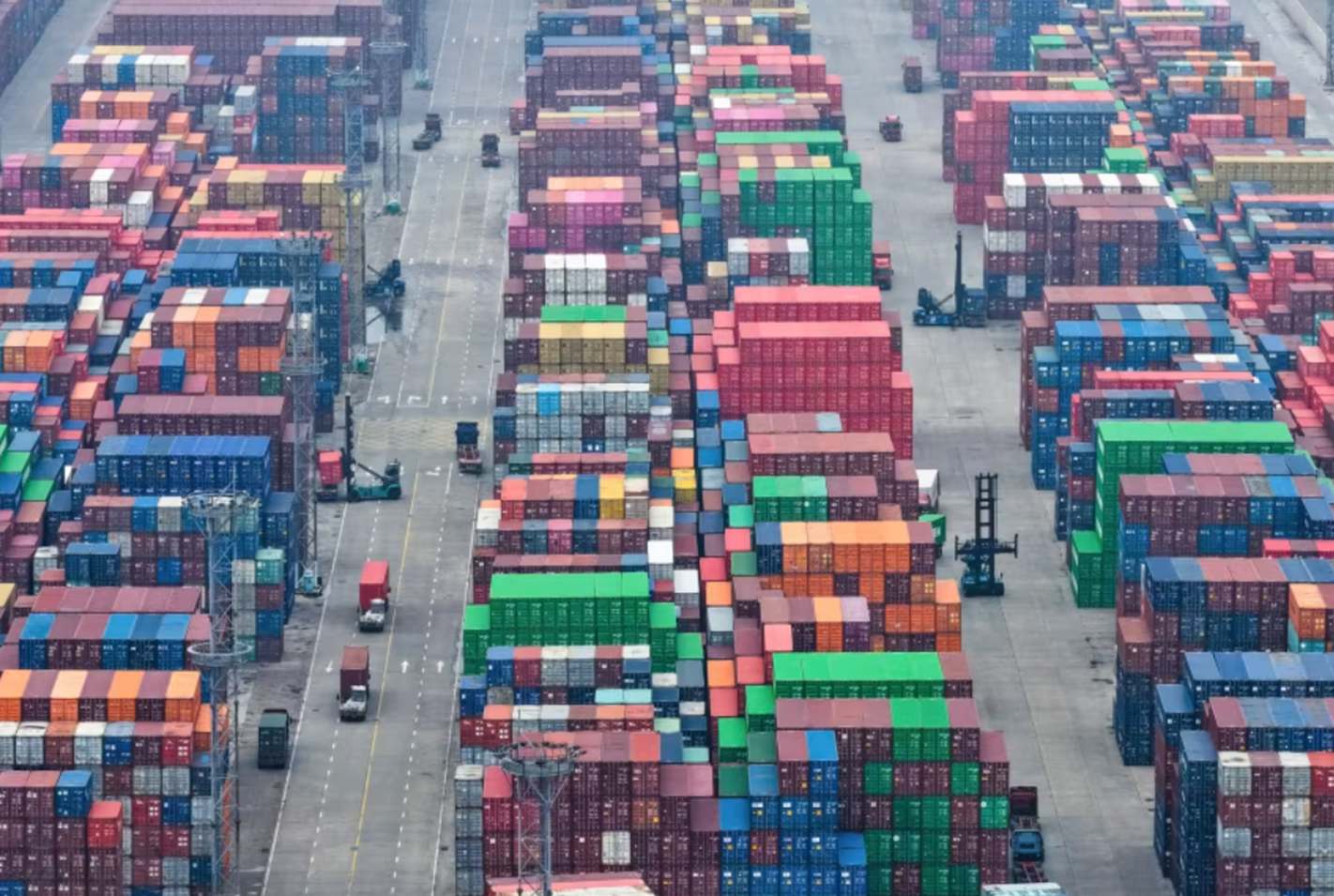
When domestic consumption cannot absorb the immense industrial capacity, the only outlet is exports. The 5.3% growth was achieved at the expense of global market absorption.
- Strategic Impact: This will trigger “Trade War 2.0.” Unlike 2018, the core of this conflict is not tariffs but “Systemic Confrontation.” Western nations will increasingly deploy “Anti-subsidy Investigations,” “Cybersecurity Standards,” and “Supply Chain Resilience Acts” to build defensive barriers. Economic diplomacy will be thoroughly “securitized.”
2.2 Currency and Competitive Pressure in the Indo-Pacific
For Indo-Pacific affairs, China’s data implies a double pressure:
- Competitive Pressure: Manufacturing nations like Vietnam, India, and Indonesia will face direct competition from high-tech, low-cost Chinese products, making their own path to industrial upgrading more challenging.
- Currency Pressure: To maintain export competitiveness, Beijing may tolerate a moderate devaluation of the Yuan. This will force Southeast Asian nations into a dilemma of “Competitive Devaluation,” increasing regional financial instability.
III. OUTLOOK: POLICY TOOLKIT LIMITS AND THE GHOST OF QUANTITATIVE EASING
Looking toward the remainder of 2026, Beijing faces a severe policy test. The 5.3% start makes the full-year target of “around 5%” appear achievable, but it also reduces the space for further stimulus.
3.1 The Fiscal and Monetary Dilemma
- Think Tank Forecast: Traditional monetary easing (interest rate and RRR cuts) has become largely ineffective for stimulating internal demand (a “liquidity trap”). While there is still space for fiscal policy, the debt pressure on local governments is immense.
- Critical Watchpoint: Will Beijing be forced into a “Chinese version of Quantitative Easing (QE),” where the central bank directly purchases government bonds? This would mark a fundamental shift in China’s financial system and could trigger capital flight and severe volatility in the Yuan exchange rate.
CONCLUSION: STRATEGIC INSIGHTS FOR GLOBAL LENS
China’s 5.3% Q1 2026 growth is an “Illusory Strength.” It is the singular thrust of a powerful industrial machine in a consumption and financial desert.
For the professional readers of Global Lens (policymakers, investors, and researchers), today’s data provides key strategic insights:
- Do Not Be Blended by Aggregate Figures: It is essential to distinguish “Industrial Growth” from “End Demand.”
- Anticipate Overcapacity Spillovers: In supply chain planning, the risk of Western trade barriers against China must be considered as a baseline scenario.
- Watch for Financial Risks: While maintaining industrial capacity, China is continually accumulating systemic risks in its financial system.
In 2026, the core task of global economic governance will no longer be how to “integrate” China, but how to “manage” the global shocks resulting from its non-equilibrium growth.