
Introduction: Returning to the Core Focus of Great Power Competition
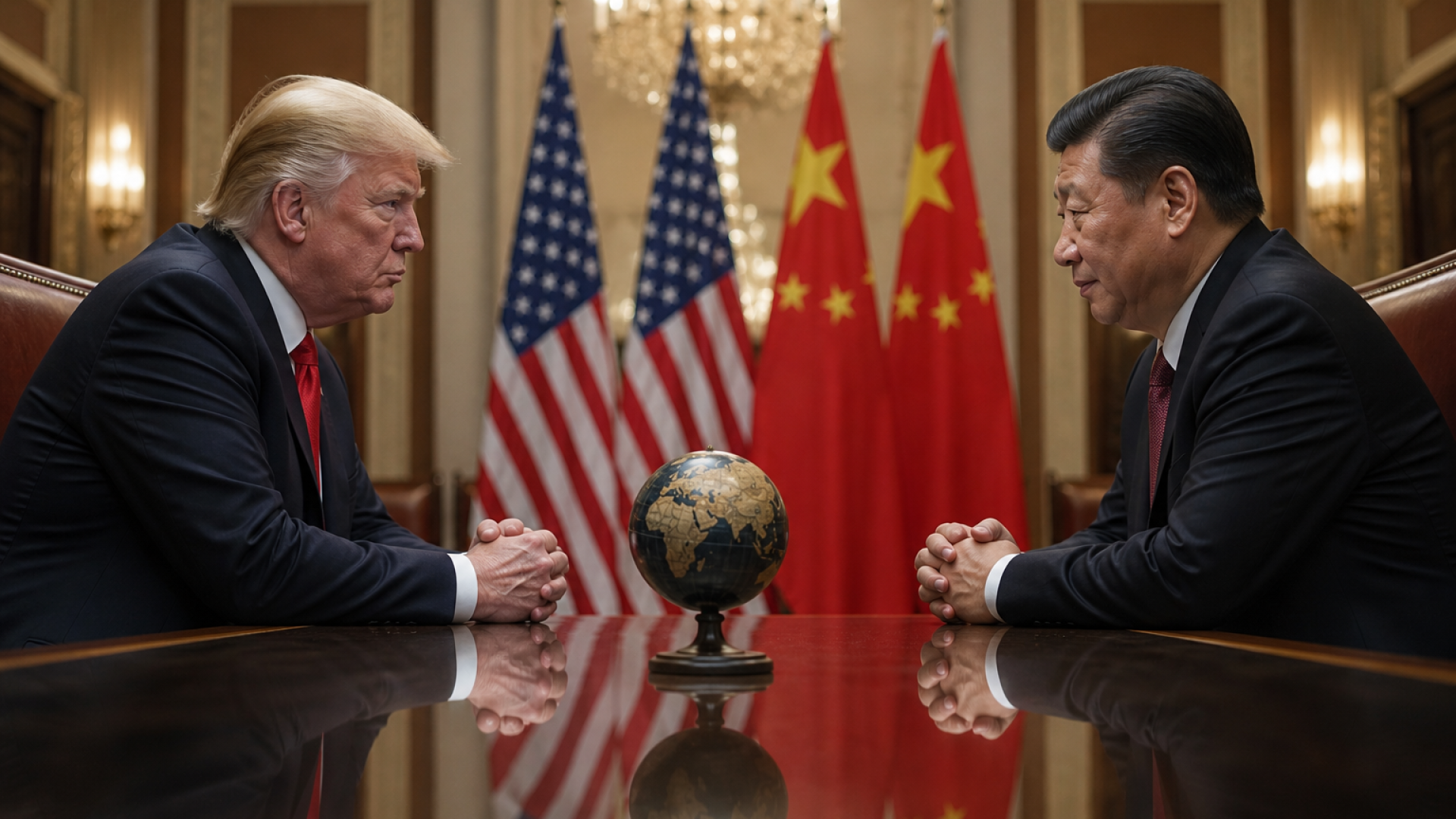
Entering 2026, the global political and economic framework once again reaches a critical juncture. With the evolution of the U.S. political landscape and the potential return of a foreign policy steered by Donald Trump, the strategic competition between Washington and Beijing has entered a more intensified and complex phase. The long-term strategic posture led by Chinese President Xi Jinping clashes once again with Trump’s highly transactional and unilateralist “America First” agenda. This battle of wills between the top leaders of both nations concerns not only the scale of bilateral trade and tech sanctions, but also shapes the security landscape of the entire Indo-Pacific region and the restructuring of global supply chains.
Maximum Trade Pressure and Deepening Tech Decoupling
On the economic front, if Trump fully implements his signaled high-tariff policies in 2026, it will deliver a structural shock to U.S.-China economic and trade relations. Such tariff policies target not only final consumer goods but also extend to re-export trade and critical components. Facing the threat of universal tariffs that could reach as high as 60%, Beijing will inevitably accelerate its “Dual Circulation” strategy, deepening the domestic market while expanding export channels to the Global South.
However, competition in the technology sector is far more disruptive than pure tariff confrontations. In critical domains such as advanced semiconductor manufacturing, artificial intelligence infrastructure, and quantum computing, U.S. export controls are expected to tighten further. Under Xi’s leadership, the Chinese government continues to pour state-level capital into indigenous research and development, striving to overcome “chokepoint” technological bottlenecks. By 2026, tech decoupling between the two sides will no longer be merely a policy slogan, but will substantially evolve into two parallel and incompatible ecosystems of technical standards.
Indo-Pacific Security and the Dynamic Balance of the Taiwan Strait Situation
In terms of geostrategy, the pattern of interaction between Trump and Xi introduces significant uncertainty to the Indo-Pacific security order. Trump’s foreign policy tends to link defense and security with economic interests, demanding that allies shoulder higher defense expenditures and troop-stationing costs. This transactional view of alliances could cause frictional integration within the U.S.-Japan-South Korea trilateral alliance and the AUKUS framework, while granting Beijing potential room to drive wedges among regional alliances.
On the Taiwan Strait issue, Trump’s unpredictability and strategic ambiguity create strong tensions with Xi’s core interest of “complete national reunification.” While Trump may view the Taiwan issue as significant leverage in trade negotiations, a bipartisan hardline stance against China in the U.S. Congress will limit the executive branch’s room for concessions on core defense commitments. In 2026, dynamics across the Taiwan Strait will remain under high pressure, characterized by frequent gray-zone conflicts, mutual deterrence, and probing.
Global Supply Chain Restructuring and Multipolar Economic Divergence
The rivalry between the two largest economies is accelerating the adoption of “China+1” or “nearshoring” strategies by multinational corporations. Emerging manufacturing hubs such as Southeast Asia, India, and Mexico will absorb more relocated capacity in 2026. However, the elongation and fragmentation of supply chains also directly drive up global manufacturing operational costs and inflation risks.
Against this backdrop, Beijing is attempting to reduce its reliance on the U.S. dollar financial system by expanding the BRICS+ framework and promoting local-currency settlement mechanisms; meanwhile, the United States is dedicated to building exclusive alliances for critical materials. The global economy is gradually bidding farewell to the era of monolithic globalization, shifting toward a new normal of bloc-based and multipolar division.
Conclusion: Finding Balance Between Maximum Pressure and Strategic Resolve
Looking comprehensively at the trajectory of U.S.-China relations in 2026, Trump’s maximum pressure tactics meeting Xi’s strategic resolve suggests that future bilateral interactions will be fraught with friction and tactical compromises. Although both sides share a fundamental tacit understanding to avoid direct military conflict, the scope of competition has expanded across all dimensions, including trade, technology, finance, and global discourse power. Enterprises and policymakers worldwide must prudently assess geopolitical risks and establish flexible, resilient contingency mechanisms amid the turbulent landscape of great-power confrontation.